26 USMNT Moments, Past to Present: Soccer Sets Sail in America
How factory teams, transatlantic voyages and improbable international breakthroughs laid the foundation for the U.S. Men’s National Team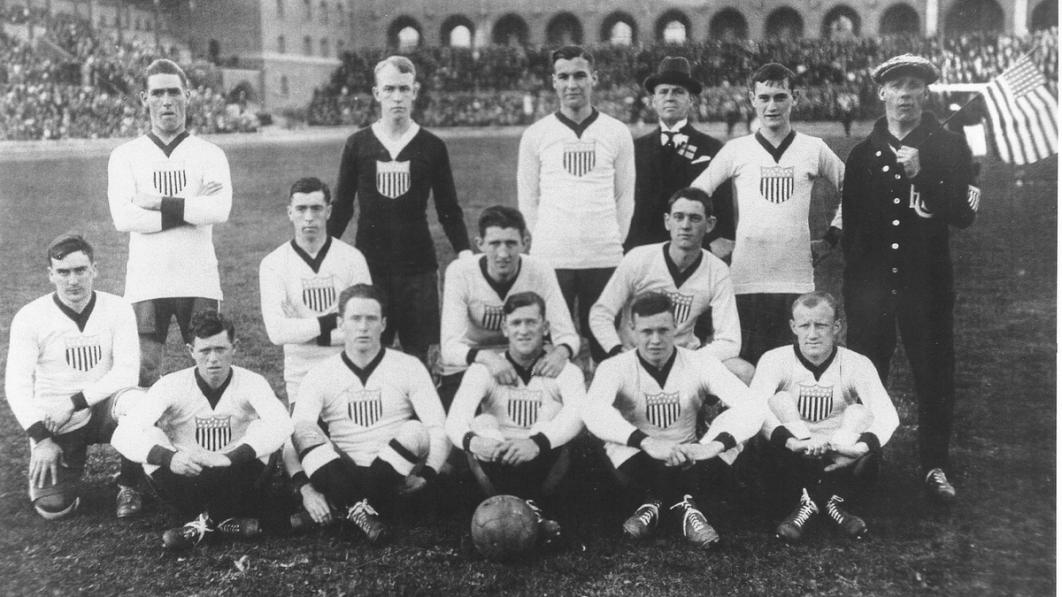
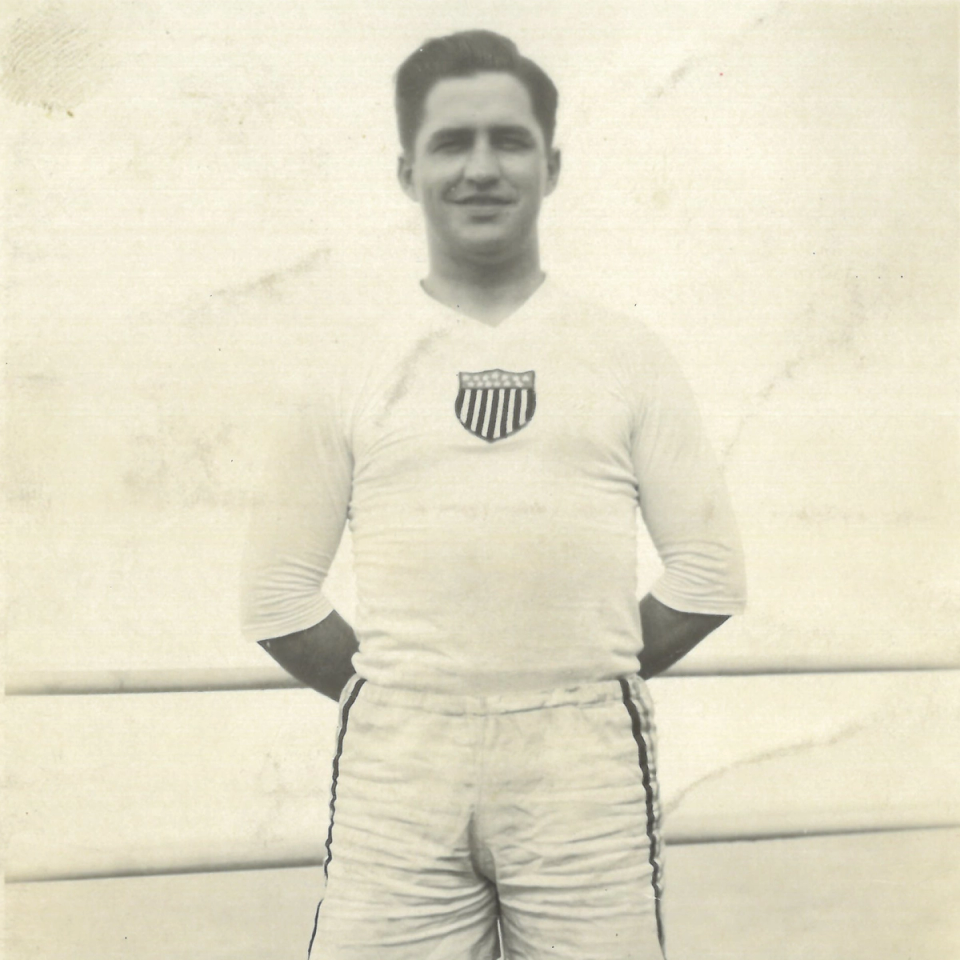
This is 26 USMNT Moments: Past to Present, a U.S. Soccer content series that covers 26 defining moments in U.S. Men's National Team history. From inspired victories to stunning goals, and the stars and hidden heroes who made them possible, each chapter reminds us that our dreams on the pitch are worth chasing. Together, they’ve built toward the biggest moment yet: the 2026 World Cup on home soil.
At the turn of the 20th century, the diverse and dynamic American sports landscape was beginning to blossom. Thanks to burgeoning urban areas, increased leisure time due to technological advancements, the emergence of newspapers and radio, and an influx of immigrants across the country, the American appetite for sports only continued to grow in the early 1900s.
Baseball—America’s national pastime—was booming, as the Boston Red Sox, Philadelphia Athletics and New York Giants were racking up pennants; Jack Johnson and Jack Dempsey were bossing the ring in the ever-popular sport of boxing; and Ivy League giants like Yale, Princeton and Harvard dominated the grueling college football gridiron.
Soccer was also growing in popularity at the same time, namely in Europe and South America, and started to catch on in the United States as immigrants brought the game to their communities, university students started playing early soccer-rugby hybrids on their respective campuses, and factory teams emerged across the Northeast.
Following decades of regional governance and attempts at legitimate national governing bodies, the United States Football Association, or the U.S. Soccer Federation as it exists today, was conceived at a meeting in New York City on April 5, 1913. Months later, the USFA was granted provisional FIFA membership before the organization was elevated to full membership in 1914.
In addition to operating the National Challenge Cup—the United States’ domestic club cup competition, now known as the Lamar Hunt U.S. Open Cup—U.S. Soccer was tasked with formally constructing a men’s national team after earlier unrecognized teams represented the United States as early as the late 1800s.
Just three years after the establishment of the Federation, the U.S. Men’s National Team was thrust—rather unexpectedly—into action in 1916. The Secretary of the Swedish Sports Confederation and Vice President of FIFA, C.L. Kornerup, reportedly invited the dynastic Bethlehem Steel FC—the Bethlehem Steel Corporation’s Pennsylvania-based factory club that dominated the early days of the U.S. Open Cup—to Sweden for a Scandinavian tour against a collection of Swedish clubs. When the corporation declined the invitation due to its ongoing involvement as a weapons manufacturer for the Allies in the ongoing global conflict—World War I—U.S. Soccer quickly pieced together an “All-America” team to participate in the tour.
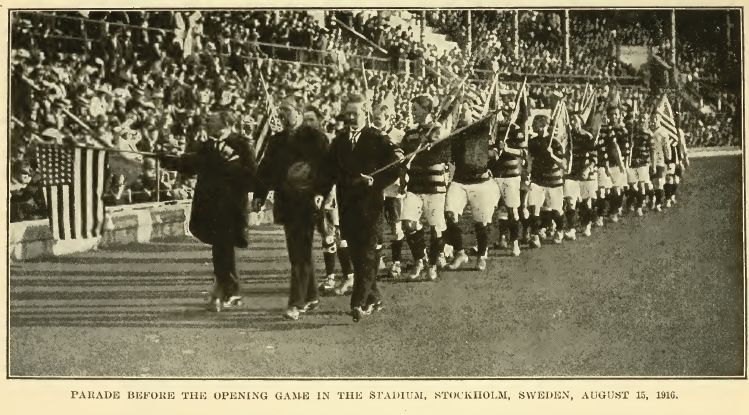
A collection of 14 players consisting mainly of athletes from Northeastern teams set sail on the SS Frederik VIII on July 26, 1916, arriving in Stockholm, Sweden two weeks later. The USMNT hit the pitch for the first time on August 15 in an unofficial tune-up match against an all-star team composed of players from a collection of Stockholm-based clubs. The match ended in a 1-1 draw.
On Aug. 20, 1916, in front of 16,000 spectators at Stockholm Olympic Stadium, the USMNT played its first official international match against Sweden, and the result was surprising. A hastily assembled USMNT defeated Sweden in its own stadium, becoming the first non-European team to defeat The Blue and Yellow. 1950 National Soccer Hall of Fame inductee Dick Spalding scored the first official goal for the USMNT in the 22nd minute to level the contest before Charles Ellis and Harry Cooper helped the USMNT to a 3-2 victory.
Two weeks later, the USMNT played its second official contest, a 1-1 draw against Norway in Oslo. At a packed Frogner Stadion, the USMNT finished its Scandinavian tour with another promising result thanks to Charles Ellis’ second goal in as many matches in what was ultimately the forward’s final match for the national team.
Due to early instability, the escalation of World War I and the difficulty of international travel, U.S. Soccer would not field another senior national team for nearly a decade.
As soccer in the United States continued to grow in popularity thanks to the emergence of the American Soccer League and Eastern Professional Soccer League, and the continued prioritization of the U.S. Open Cup, U.S. Soccer fielded a senior national team for the second time in 1924.
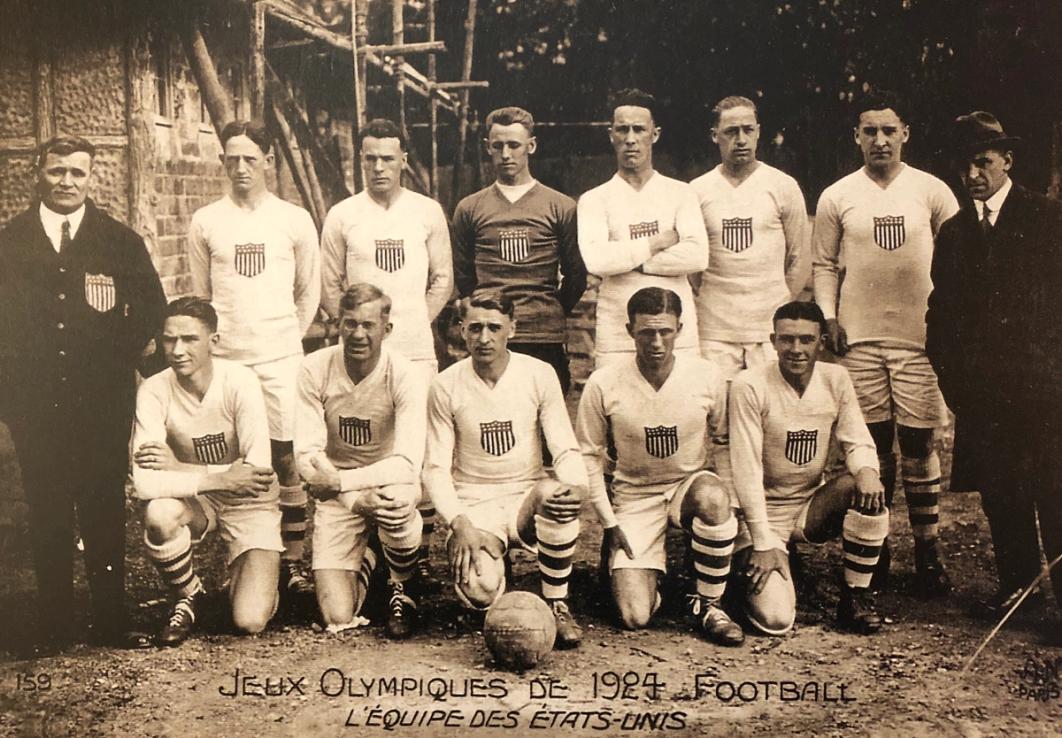
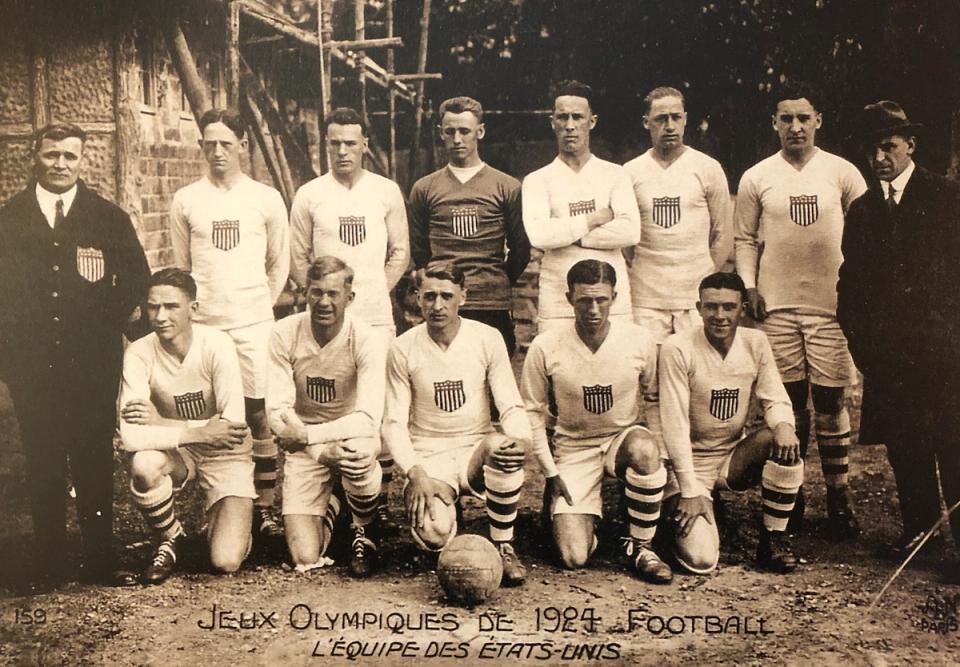
Ahead of its first competitive tournament appearance in the 1924 Summer Olympics in Paris, France, the federation assembled a roster made up largely of amateur players due to the ongoing ASL season. With the first FIFA World Cup still six years away, the soccer tournament at the Olympics—expanded to include teams from South America, Africa and North America for the first time in 1924—was widely regarded as the preeminent global soccer tournament.
After individual sendoff parades and banquets from Los Angeles to St. Louis to Philadelphia, the squad of 17 selected players set off from Hoboken, N.J. on a 10-day voyage aboard the S.S. America. Before arriving in Cherbourg, France, the USMNT trained twice daily on the ocean liner, working on strength and conditioning in the morning before ending the day with technical work—such as shooting, dribbling and passing—on the top deck.
Once in Paris, the USMNT opened its Olympic campaign with a 1-0 victory against the run of play versus Estonia. In front of a surprisingly hostile crowd of over 8,000 at Stade Pershing, forward Andy Straden converted a first-half penalty kick to send the USMNT to the Round of 16, giving the team its first-ever win in official competition. The United States was eliminated in the Round of 16 with a 3-0 loss to Uruguay, as the South American giants kicked off their decade of total dominance. With its return trip not scheduled until later in the summer, the USMNT traveled across Europe, defeating Poland in Warsaw before falling to Ireland in Dublin.
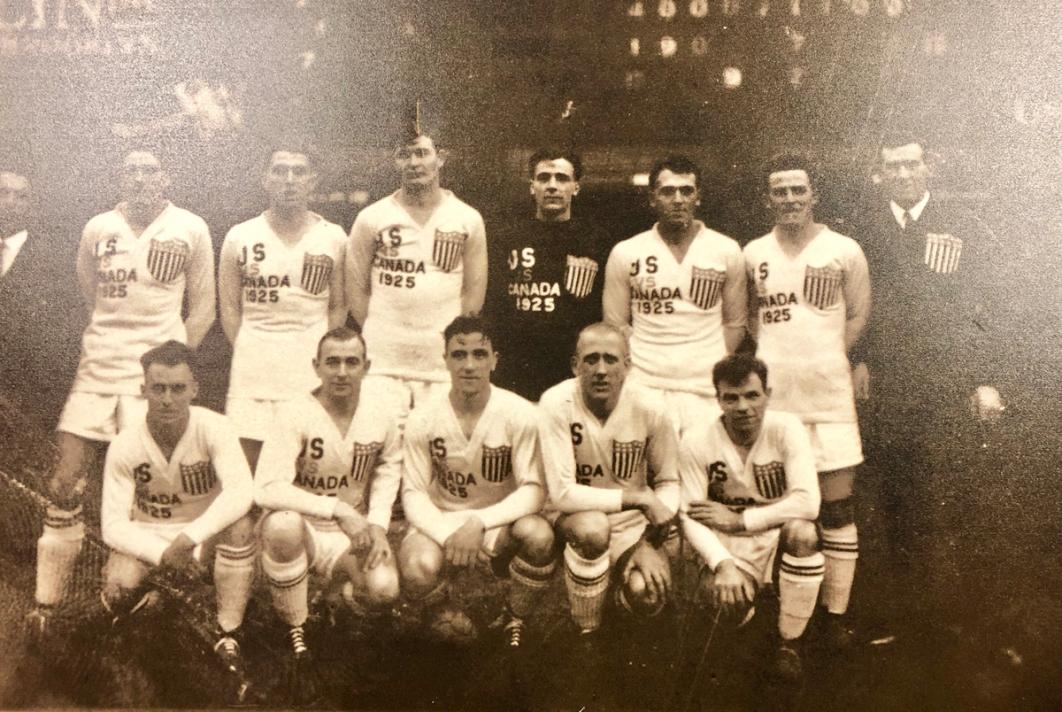
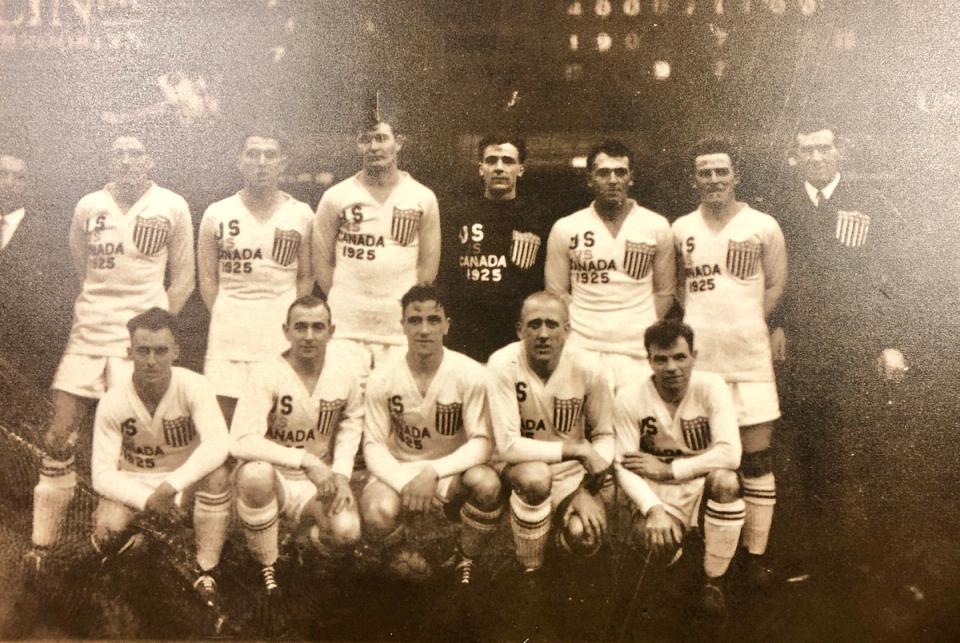
The United States played only three official matches between 1925 and 1927 and all three came against regional foe Canada—each side’s first meetings with a fellow North American side. Canada won the first contest with a 1-0 victory in Montréal, but it was the USMNT that bounced back in a big way soon thereafter. In a pair of matchups against Canada at Ebbets Field in Brooklyn—the USMNT’s first official matches on home soil—the United States tallied the largest wins of its early years, dismantling its budding rival 6-1 on Nov. 8, 1925, and 6-2 on Nov. 6, 1926. Across the two fixtures, 11 of the 12 goals were scored by future National Soccer Hall of Fame inductees, as ASL legend Archie Stark netted five in 1925, before Davey Brown and Andy Auld both posted braces in 1926.
Following a one-and-done experience delivered by Argentina at the 1928 Summer Olympics in Amsterdam, the USMNT’s next big task was the 1930 FIFA World Cup in Montevideo, Uruguay. Uncertainty surrounded the United States’ squad and its ability as the team embarked on the 18-day journey on the SS Munargo from Hoboken, N.J. to Montevideo. What came next was history, not only for the USMNT but also for the FIFA World Cup itself.
The United States dominated Group 4 of the inaugural World Cup, defeating both Belgium and Paraguay by 3-0 scorelines at Estadio Gran Parque Central. Against 1920 Summer Olympic champions Belgium, future National Soccer Hall of Famers Bart McGhee, Tom Florie and Bert Patenaude scored while fellow Hall of Fame goalkeeper Jimmy Douglas tallied the first clean sheet in World Cup history.
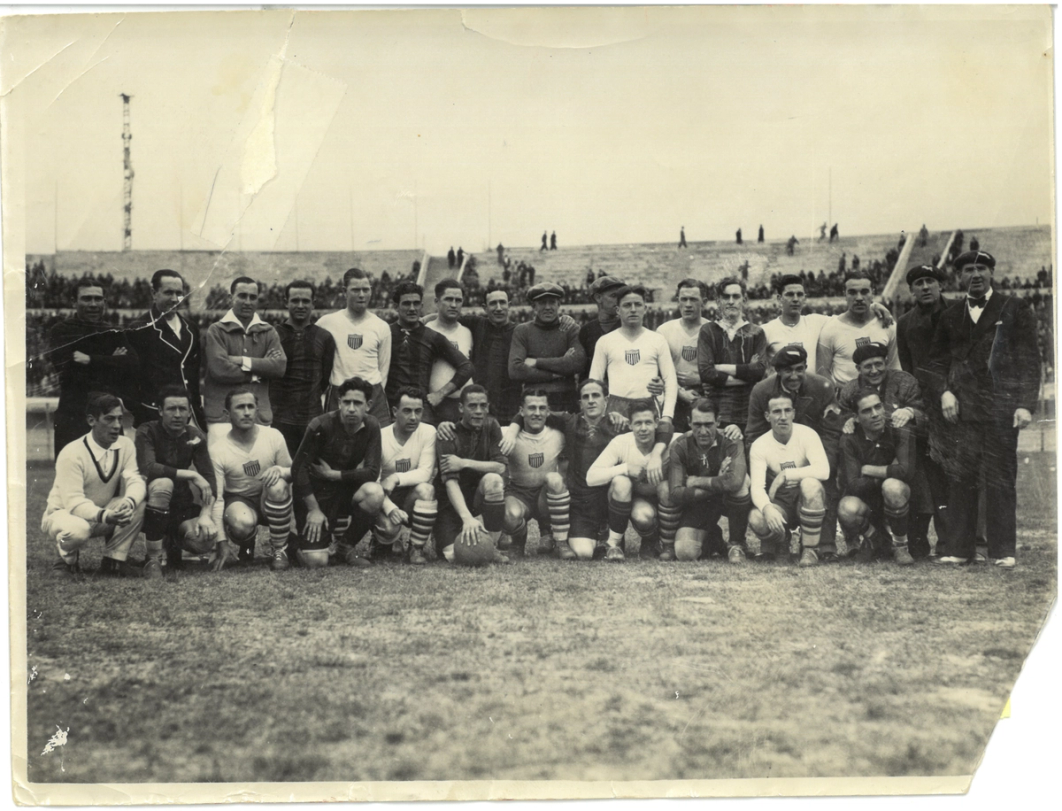
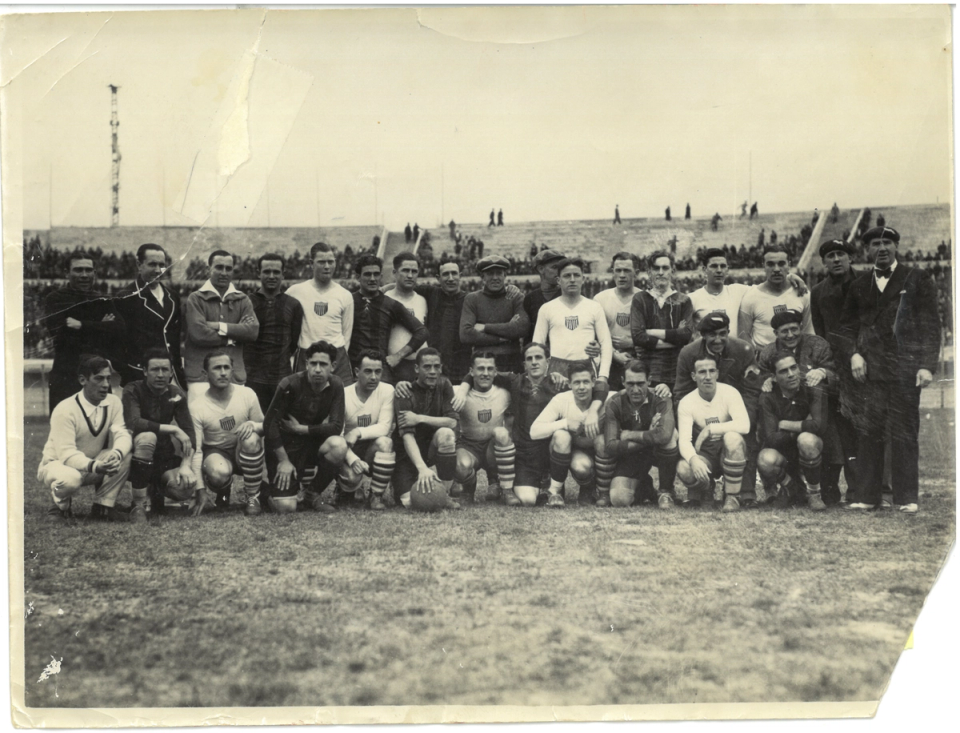
Fresh off trophy-winning ASL and U.S. Open Cup campaigns with the Fall River Marksmen, Patenaude followed up his one-goal showing against Belgium with a landmark performance against Paraguay days later. With goals in the 10th, 15th and 50th minutes, the 20-year-old from Fall River, Mass. etched his name into global soccer history, becoming the first player to score a hat trick at the World Cup. Of the 54 hat tricks scored at the World Cup to date, Patenaude remains the lone USMNT player to achieve the feat—something that was only confirmed by FIFA 76 years later thanks to the efforts of former U.S. Soccer historian Colin Jose.
Following the two-match Group Stage, the USMNT were again bested by a strong Argentina side, this time falling in the Semifinals 6-1. Despite the undesirable result and no third-place match, the United States was retroactively recognized as the third-place finisher—still the USMNT’s best result at any World Cup.
As soccer flourished in the United States and around the world, U.S. Soccer continued to field a senior men’s national team as the first half of the 20th century progressed. As the years and decades marched on, the USMNT found replicating the success of its nascent days more difficult.
After qualifying for the 1934 FIFA World Cup thanks to a 4-2 victory against regional rival Mexico—the pair’s first meeting—the USMNT fell to host and eventual champion Italy in its first and only match at the 1934 World Cup. Of note, all five goals the USMNT scored in either World Cup qualification or the tournament proper in Italy were scored by Italian American Aldo Donelli, who would later go on to play college football and coach in the NFL.
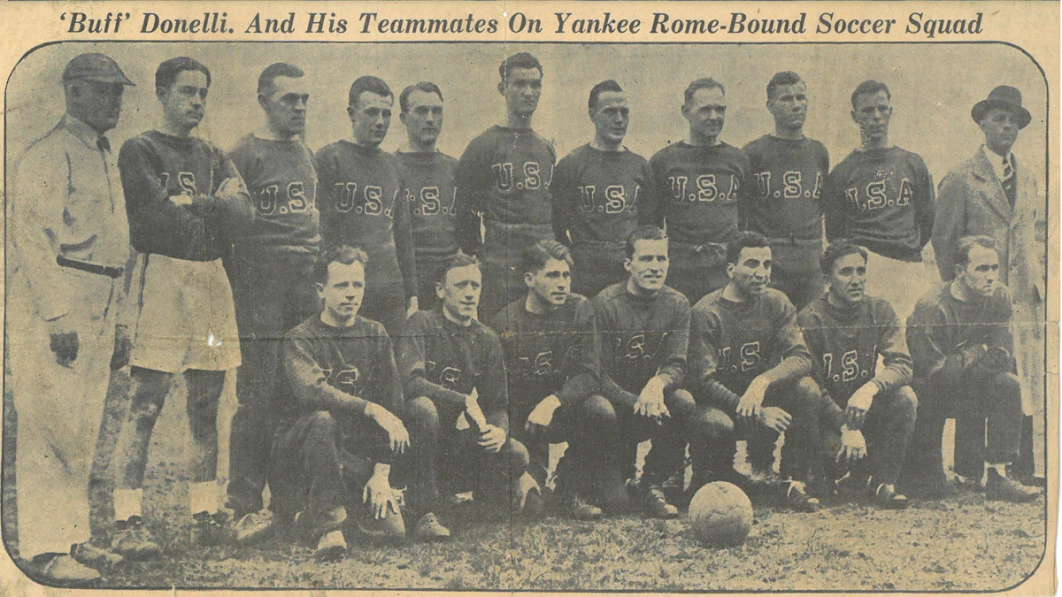
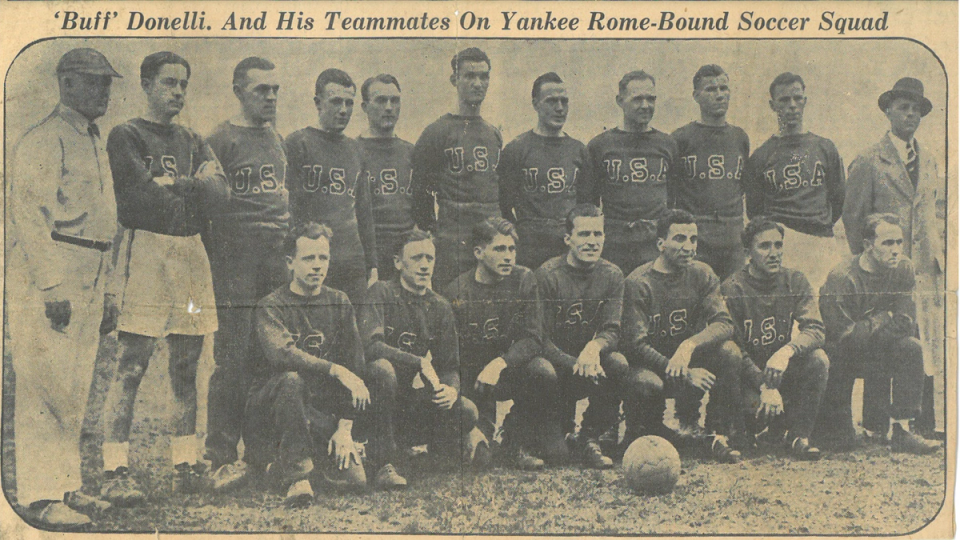
From there, the USMNT found wins increasingly hard to come by, failing to find victory in 13 consecutive matches between 1935 and 1949, a stretch that included a nearly decade-long hiatus in play due to World War II and the emergence of established regional powers such as Mexico and Cuba.
The USMNT snapped its 14-match winless streak after 15 years with a 5-2 victory against Cuba in the 1949 NAFC Championship in Mexico City. Organized by the North American Football Confederation, a direct predecessor to Concacaf, the NAFC Championship served as the region’s qualification to the FIFA World Cup. With a 1-2-1 runner-up finish in the three-team tournament, the USMNT secured qualification to its third World Cup—the 1950 FIFA World Cup in Brazil—where the United States would go on to produce one of the most remarkable upsets in tournament history.
Ethan Triebsch is the U.S. Open Cup Writer and Producer at U.S. Soccer, coordinating the tournament’s content strategy. Prior to joining U.S. Soccer, Ethan spent time with the United Soccer League (USL), Memphis 901 FC and Major League Soccer (MLS). Over the past decade, he has also contributed to content and communications efforts for Vancouver Whitecaps FC, Sporting Kansas City and Atlanta United FC. Ethan earned his journalism degree from the University of Missouri and his MBA from Bellevue University. You can follow Ethan on X.