Inside the Player Pathway: How U.S. Soccer Finds Top Youth Talent Across the Country
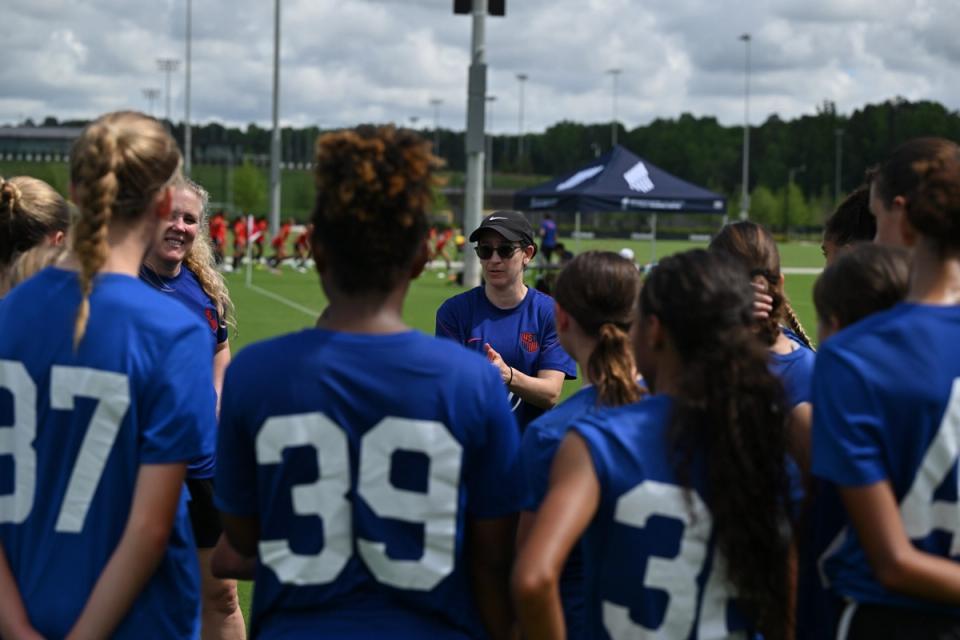
Head of Talent ID Tony Lepore shares insight on the Federation's process to scouting soccer players for the U.S. Youth National Teams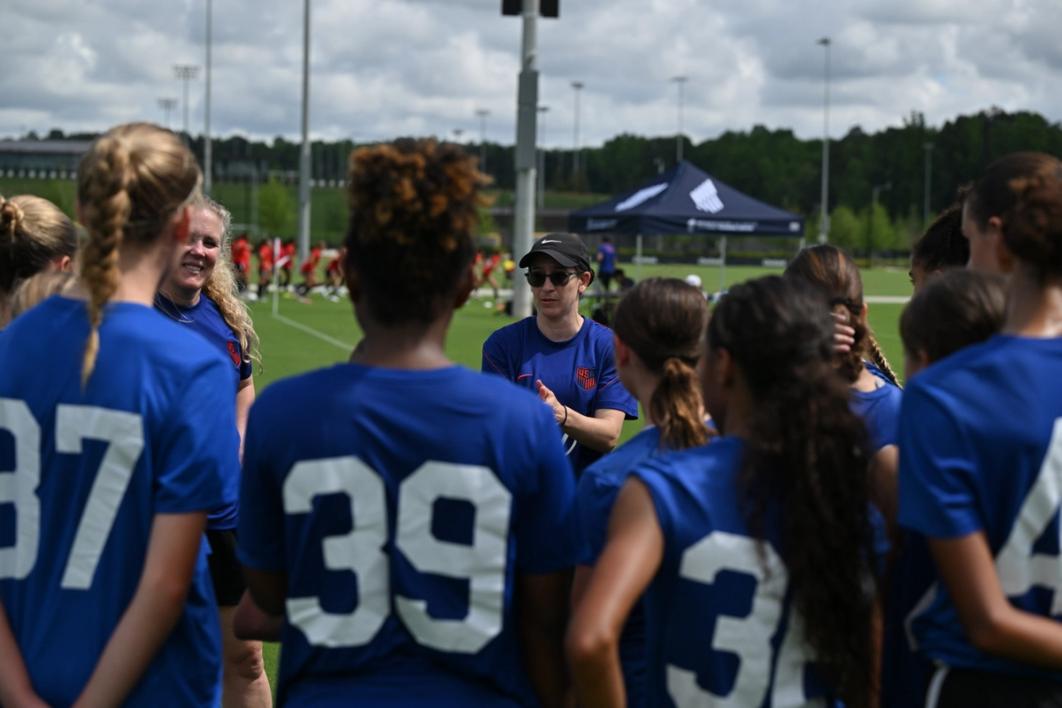
The next generation of U.S. Soccer talent is already making its mark on the international stage. Earlier this month, the U.S. Under-19 Men’s National Team clinched a spot in the 2027 FIFA U-20 World Cup, while later this year, the USA will compete at the 2026 FIFA U-20 Women’s World Cup and both the Men’s and Women’s 2026 FIFA U-17 World Cup.
Those opportunities embody the U.S. Way philosophy, which aims to develop and nurture young players while contributing to the growth and success of the game in America. At the heart of that process is U.S. Soccer’s talent identification (TID) strategy, which allows promising players from across the country a higher chance to be scouted.
Tony Lepore, Head of Talent ID at U.S. Soccer, recently spoke to U.S. Soccer staff about how the Talent ID team identifies and evaluates talent, what they look for in young players, and the strategy behind their work.
Talent identification describes the holistic process of recognizing and selecting players who show the potential to excel at a more advanced level of competition and become National Team players.
Talent scouts are trained to identify players who demonstrate a specific set of criteria that U.S. Soccer is looking for with the goal of expanding and improving the youth player pool.
According to Lepore, his team looks for six key qualities that came from a comprehensive analysis of the role models and world-class players on the senior National Teams:
“When we look at the key qualities as the criteria and basis for development and for identifying players, we also talk about how these are interconnected,” Lepore said. “It's holistic. We also say they're equally important. It's really difficult to talk about one key quality without talking about another.”
The first three are on-field skills that scouts can more easily identify – can the player read the game well and make the right decision that is executed well both physically and technically? Meanwhile, scouts may observe before or after training to see whether players embody a growth mindset with a continuous desire and ability to learn.
Both men’s and women's youth national team programs field regional managers that cover eight sectors of the country. From there, over 200 part-time, independent talent scouts are assigned by the managers to cover games and training sessions within those regions.
With the recent development of the TID strategy, the women’s side has a college scout manager for the first time. The men’s side features a European scout focused on dual nationals primarily in Germany and England. According to Lepore, U.S. Soccer is currently tracking about 250 women’s college players and several hundred players based in Europe.
There is also a scouting department within the senior National Teams that evaluates Youth National Team players to bring up the pathway.
A network of nearly 500 talent reporters receive player recommendation reports from clubs and leagues across the country, which undergo initial observation periods. Then, TID managers will assign scouts to observe, assess and evaluate those players over extended periods of time. These players will often be selected to attend a TID Center, which are single-day training sessions designed to replicate Youth National Team camps.
“The next stage is tracking, and this is where we really start to record the progress and development,” Lepore said. “If you look at our regional managers, we often call them cross-checkers, because they are constantly cross-checking reports and information that's coming in from multiple sources – a talent reporter, a talent scout, another talent ID manager, even a Youth National Team coach, who also submitsreports using the same system, same scales. This is where really important video statistics and data come into the process.”
The final stage is longitudinal monitoring, which focuses on long-term potential and growth trajectory. Evaluation includes information on biological maturation, fitness, injury and overall health over the course of months or years.
“We have some players that are in our system for years before they're recommended for their first Youth National Team camp,” Lepore said. “We really celebrate that. For us, it's about the right player at the right moment in the right camp, and you'll see that different camps have different objectives for us.”
The growth in U.S. Soccer’s Talent ID strategy, specifically over the last few years, has allowed for more players to be seen, therefore growing the player pool and the talent within the entire federation.
From Aug. 1, 2025, to July 31, 2026, the scouts received 6,515 assignments, observing approximately 2,220 players per week. Nearly 8,000 unique players were identified and tracked during that period, leading to 1,276 unique player call-ups to a Youth National Team camp, with 40% being first-timers. U.S. Soccer hosted 188 Talent ID Centers across 42 locations, including 12 goalkeeper-specific sessions that led to over 200 new male and female goalkeepers added to the player pool.
More than 90% of the players who competed for the U.S. Men’s and Women’s National Team last year formerly competed with the Youth National Team, showing the importance of Talent ID and development withinthe pathway.
To learn more about U.S. Soccer’s Talent ID program, visit: https://www.ussoccer.com/talent-identification