26 USMNT Moments, Past to Present: A Rising Generation
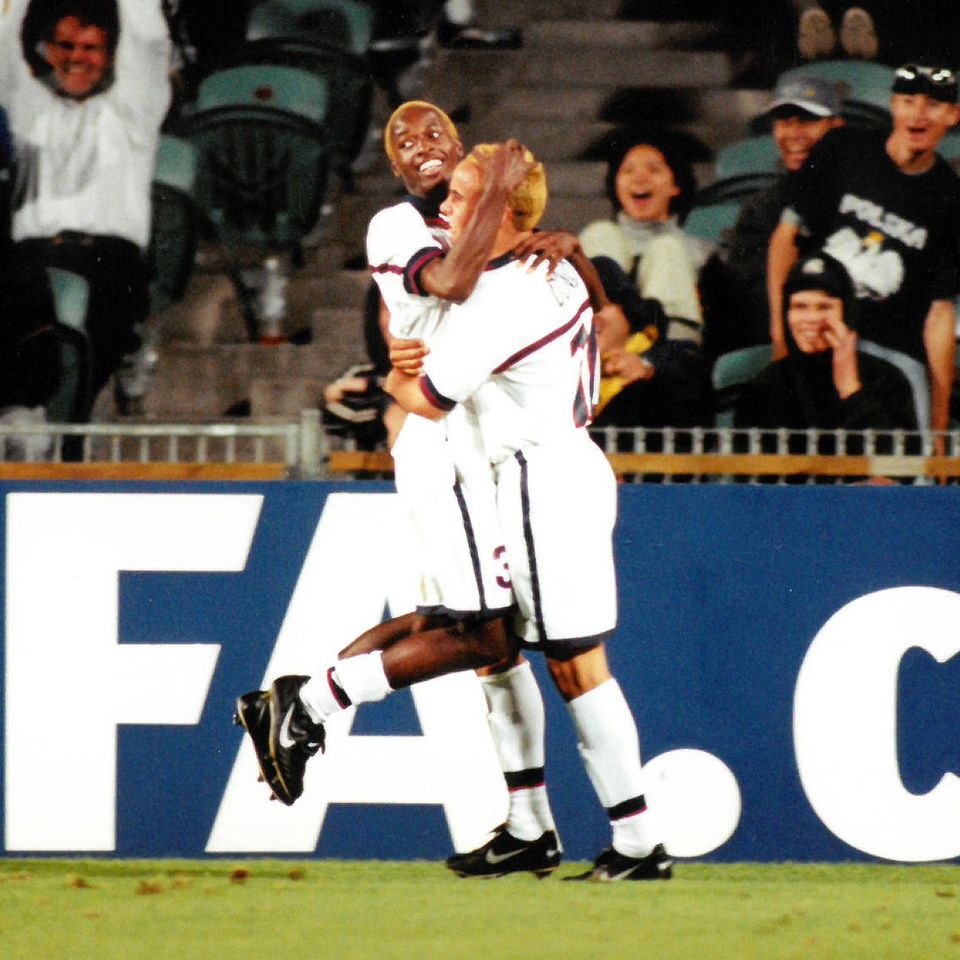
1999 U-17 Men’s National Team posts its best-ever finish at the U-17 FIFA World Cup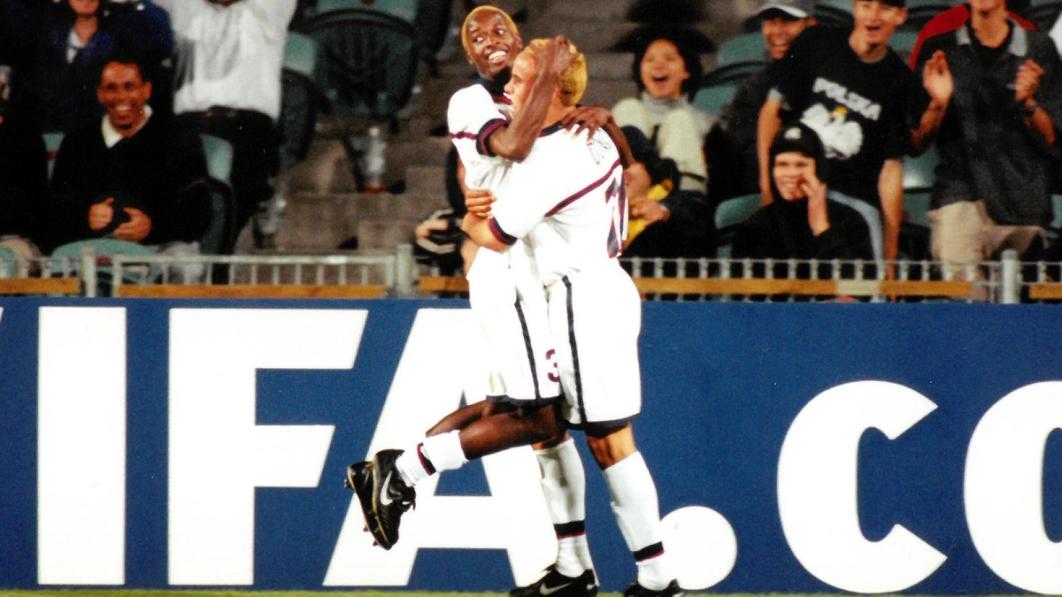
This is 26 USMNT Moments: Past to Present, a U.S. Soccer content series that covers 26 defining moments in U.S. Men's National Team history. From inspired victories to stunning goals, and the stars and hidden heroes who made them possible, each chapter reminds us that our dreams on the pitch are worth chasing. Together, they’ve built toward the biggest moment yet: the 2026 World Cup on home soil.
What happens when a group of 16 and 17-year-olds are tasked with doing nothing but eating, sleeping and playing soccer together? The 1999 U-17 U.S. Men’s National Team carried out that hypothetical and did something no one before or after them had accomplished.
Still the best finish by a U.S. men’s team at a youth World Cup, the squad made the semifinals of the 1999 FIFA U-17 World Championship in New Zealand. How they did it exactly is a story of heartbreak, of shared dedication and delusion, and of brotherhood.
“It was literally like a family,” team member DaMarcus Beasley said in a 2019 interview. “You wake up, you do the regular things you do as a human being, but you’re doing it all together. There were no parents, no one telling us what time to get up. We were just young men at 15 and 16 years old, going to school, living, breathing, eating, playing—everything together.
U.S. Soccer had a plan. The Federation knew that if they wanted to be a true competitor on the global stage, they would need to start developing teams, not just players, at a younger age. Enter the U-17 Residency Program, born out of the “Project 2010” plan that famed coach Carlos Queiroz wrote for U.S. Soccer in the 1990s. Founded in 1998, the program was a bold experiment where 24 players gathered in Bradenton, Fla.—now IMG Academy—and committed their lives to soccer entirely.
“We thought it was pretty crazy, but we wanted to be a part of what U.S. Soccer was doing,” team member and co-captain Nelson Akwari said. “We all went down to Florida with our families to check it out, and we were presented with an opportunity to live together with around 20 other guys, go to school and play soccer together.”
Looking back on it today, the amount of talent on the roster is hard to fathom. Future USMNT World Cup players Landon Donovan, DaMarcus Beasley, Bobby Convey, Oguchi Onyewu and Kyle Beckerman were all part of the 1999 group. Even more went on to have strong professional careers. All were all under the same roof, competing on the same pitches with the same goal in mind: prove soccer in the United States has a bright future.
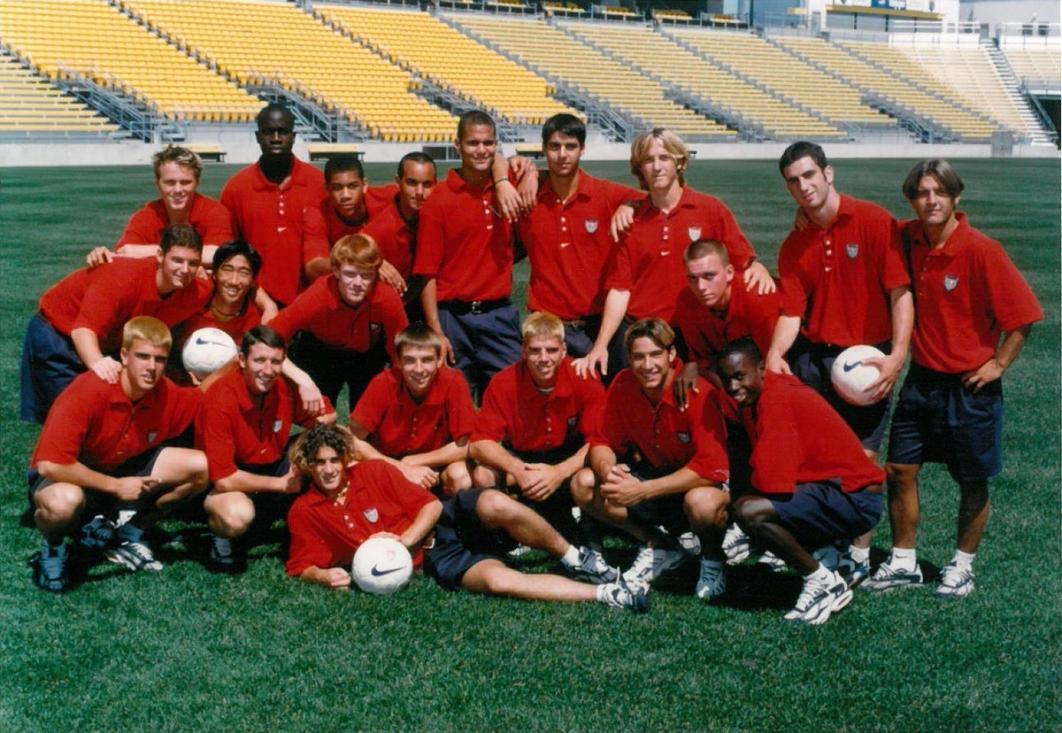
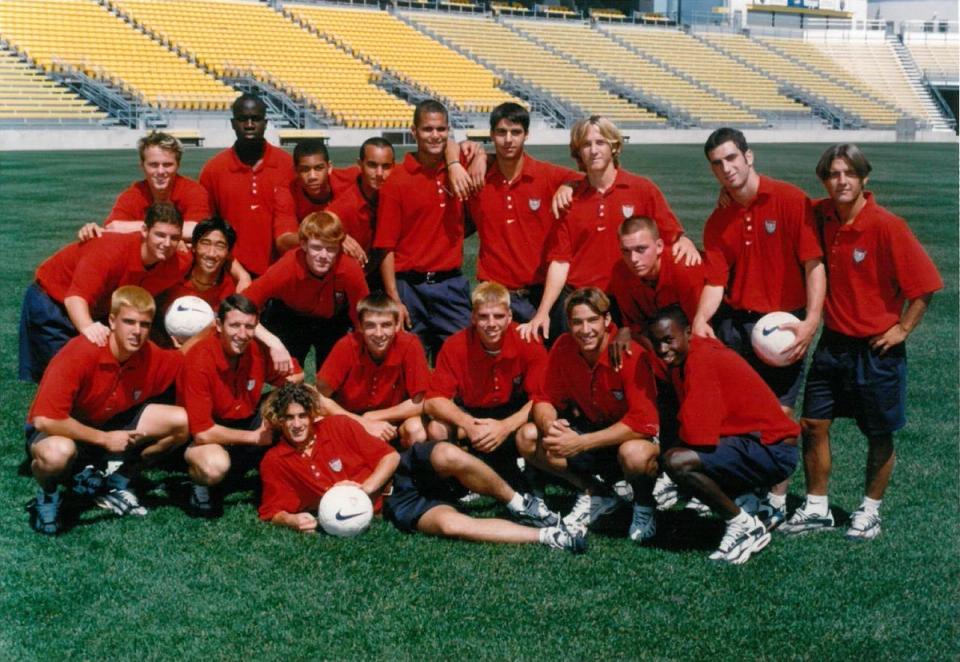
The living situation wasn’t the ritziest, resembling a college dorm experience with bunkbeds and shared suites. But the players quickly realized that they were joining together to make something incredible happen.
“I think we noticed early on that it was a perfect storm of personalities, talent and team chemistry,” team member Jordan Cila said. “When we realized that, we saw that there was something special, and then you add in going to school together. When you’re with 20 of your best friends in a class, it’s hard to focus on anything, but it was a really amazing experience.”
Throwing a group of 20+ teenagers, very talented teenagers at that, into a few rooms after lighting their competitive fire in training every day was a recipe for spats, fights, bickering and more. But, in the end, the players knew what they were doing was bigger than themselves as individuals. They were forming a brotherhood.
After months of time together and trips to various international tournaments abroad, the U-17 MNT’s next and biggest goal was to qualify for the World Championship.
Qualification came down to the wire. After drawing against Costa Rica and defeating Honduras, the U.S. failed to defeat hosts Jamaica and were forced to go to a home-and-away playoff against El Salvador to secure their spot at the World Cup.
The first leg was on the road in what was an incredibly hostile environment, particularly for a group of teenagers. Not to mention, they were without one of their lead goalscorers in Donovan, who was suspended after picking up a red card against Jamaica.
“As 16 and 17-year-olds, [head coach] John Ellinger told us that when we got off the bus, you’re going to have fans that are going to want to take your head off,” Akwari said. “They’re going to be yelling and screaming at you; there are going to be security guards with machine guns.”
Conceding an early own goal, the U.S. were up against it. The players said they remember feeling, at that point, like there was no way they’d come back against El Salvador with that kind of atmosphere and hostility around them.
But they had prepared for this. Before the match, Ellinger made the boys watch videos of past qualifiers, where fans would throw things like batteries and bags of urine onto the pitch when the away team had a corner kick.
Still, nothing could compare to the real thing.
“I had a dead chicken head land on my foot as I was about to take a corner kick,” Beasley said. “I’ll never forget it. Nobody else wanted to take corners after that. It was, ‘Beas, you keep taking corners.’”
With their backs against the wall, their talent was undeniable. Cila scored a hat trick en route to a 6-1 win, all goals unanswered, to take a commanding lead on aggregate heading back home. In a brand-new Columbus Crew Stadium, the U.S. earned a comfortable 4-0 win in the second leg to qualify for the 1999 FIFA U-17 World Championship.
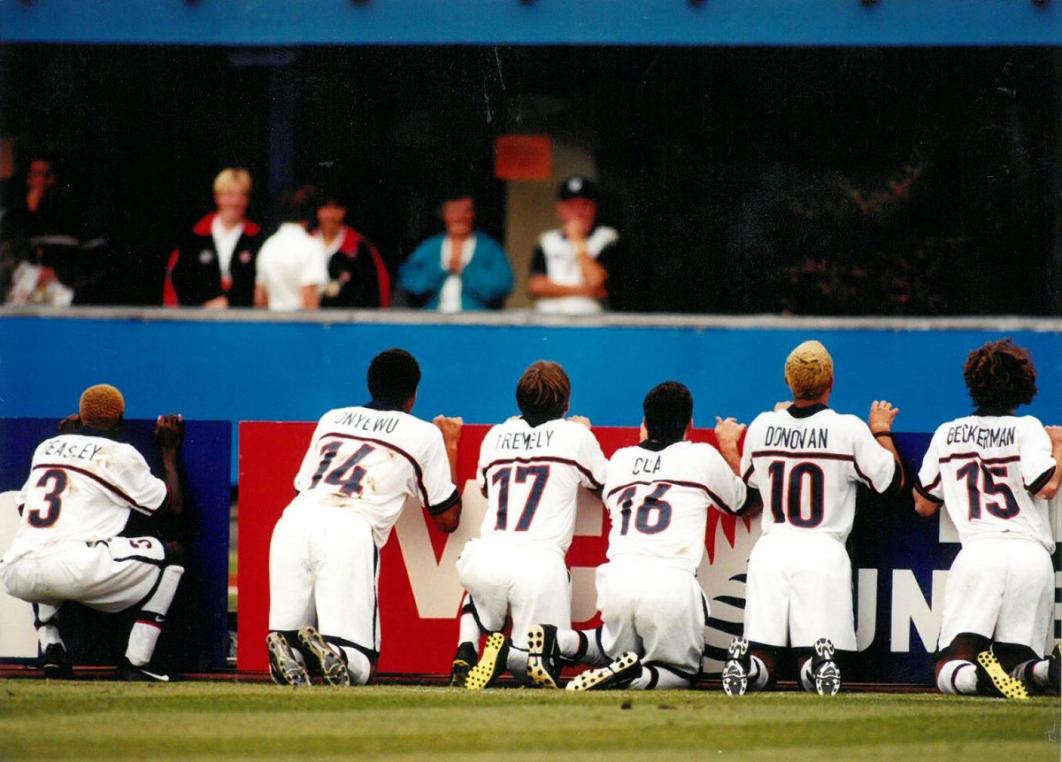
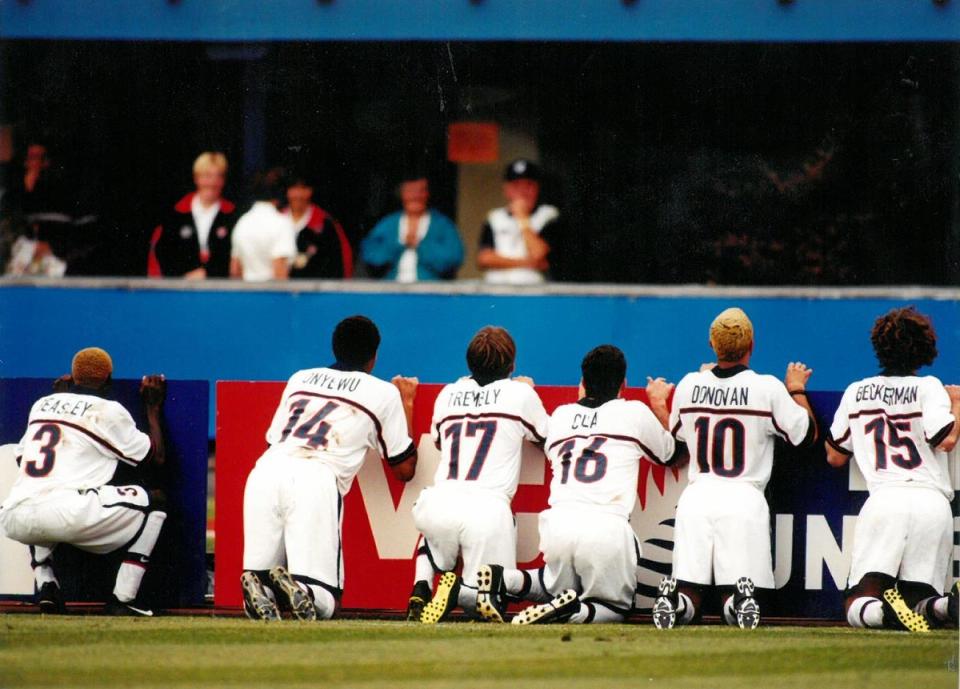
Now, they had to prepare for what would be their greatest challenge yet. Scheduling was tricky, though, and U-17s had to settle for playing mostly collegiate and professional reserve teams to ready themselves.
That’s where the true personality of the group shined. Ellinger had to reprimand the squad after opponents told him his group of 16 and 17-year-olds were talking trash on the pitch.
“We knew we were good, and we had this swagger about us that whoever we played—if we played professionals, college teams, teams our own age—we were going to play, and we were going to talk a little trash while doing it,” Beasley said. “We could back it up, because we were a good group. It was good to have [Akwari] and our coaches to bring that humility, and to remind us we hadn’t accomplished anything yet, focus on the game, and treat it with respect. It’s hard telling a 16-year-old kid that when you’re beating grown men.”
“We could have been humbler…” Cila added.
That bit of ego defined the group, and they took it with them to New Zealand for the World Championship. The U.S. faced the hosts in their first match of the tournament; a 2-1 comeback win with goals from Donovan and Abe Thompson. They had to scrape a result in their second match, with Donovan converting a penalty kick in the 89th minute to earn a 1-1 draw with Poland.
The final match of the group stage against Uruguay ended in theatrics as well, as a Beasley corner kick found Onyewu, who turned it in for a 90th minute winner. The results were dramatic, but the belief in the squad never wavered.
"We had played a bunch of games against youth national teams from other parts of the world and we had this feeling that we could really compete with any team," Donovan said.
"Whether that was real or not, who knows? But we really had this mentality that we were good enough. We sort of had a brash, carefree belief that we could beat teams. Maybe it was a little naive, but I think ithelped us. One slogan we always had from Ellinger was, ‘Respect everyone you play, but don't fear anybody' so let's go for it and try to do it. And that's what we did."
Down 1-0 to Mexico just two minutes into the quarterfinal, the U.S. roared back with three goals in a 10-minute span from Beasley, Cila and Convey and ended up winning 3-2 to become the first and still only U.S. men’s youth side to advance to a World Cup semifinal where they would face Australia.
The Stars and Stripes were working on a 24-match unbeaten run, a streak of destiny that felt like it was bound for a final berth.
After trailing 2-0, goals from Donovan and Onyewu on either side of halftime leveled the fixture. The match went to extra time, where the U.S. pressed on for a winning goal but couldn’t find it. Penalty shootout would decide who goes through, and it was Australia who won 7-6 after eight rounds of kicks.
Co-captain Kenny Cutler fell to the turf after missing the final penalty, letting out all the emotion of a team whose dream was just crushed. The result shattered a squad whose confidence was at an all-time high coming into it. But their brotherhood was bigger.
“Throughout the cycle, Kenny and I were co-captains of the team,” Akwari said. “As a team, we talked about the fact that I was supposed to wear the captain’s armband for the Third Place Game against Ghana, because we rotated it between the two of us. When we talked about it, we said, ‘Kenny missed that last PK, but basically we all missed that PK.’ We were all together and we said, ‘Kenny, we want you to wear that captain’s armband. We want you to walk us out on the field.’”
There was still so much good to take from the tournament run. Up until that point, it was the first time ever that two Americans took home the top two individual prizes of a FIFA tournament—Donovan winning the Golden Ball and Beasley winning the Silver Ball.
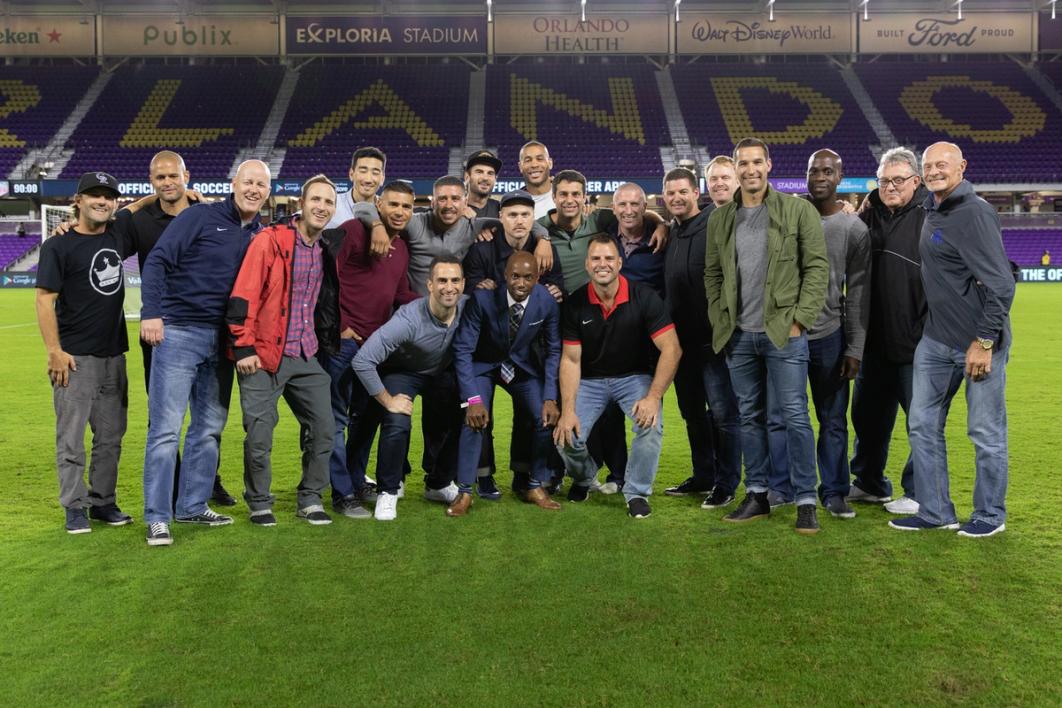
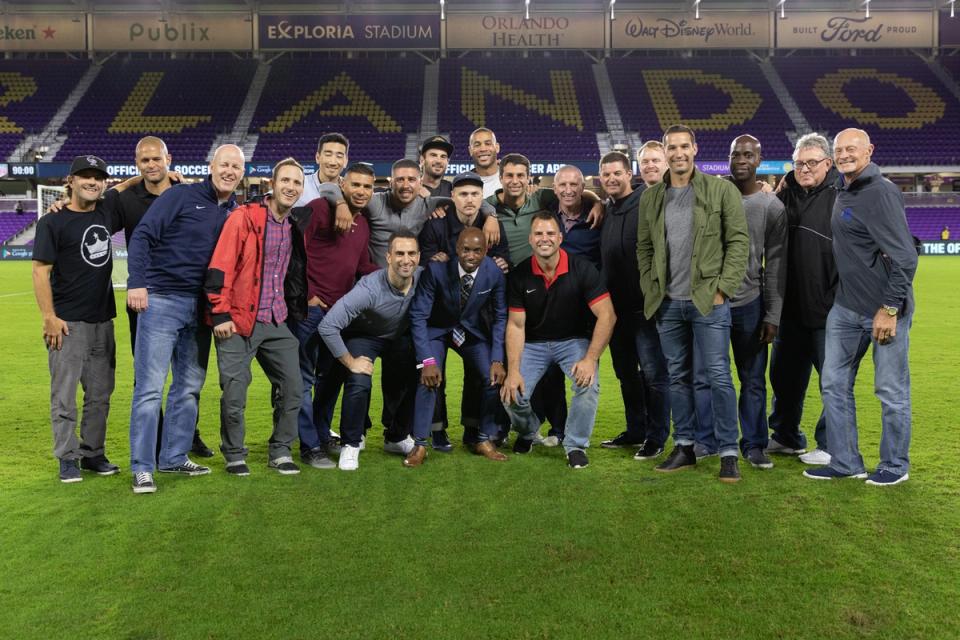
But moments like what happened in the third-place match carry more weight than the individual trophies or the even victories that contributed to the best finish by a U.S. Men’s Youth National Team. A group of irrationally confident kids didn’t let disappointment dissolve them. They knew what they had formed would be a lifelong camaraderie.
“The whole experience is what makes us brothers,” Beasley said. “That’s what makes us, us. We were living together for more than a year. Day in, day out, training, eating, going to school, 24/7. At the end of the day, that’s why we’re so tight.”
Adam Jasper is the Editorial and Web Coordinator for Atlanta United and has covered soccer since he was in high school. Adam is an alum of the Annenberg School for Communication and Journalism at the University of Southern California. Follow Adam on X.