26 USMNT Moments, Past to Present: Home Advantage
The U.S. Men’s National Team breaks through at the 1994 FIFA World Cup on home soil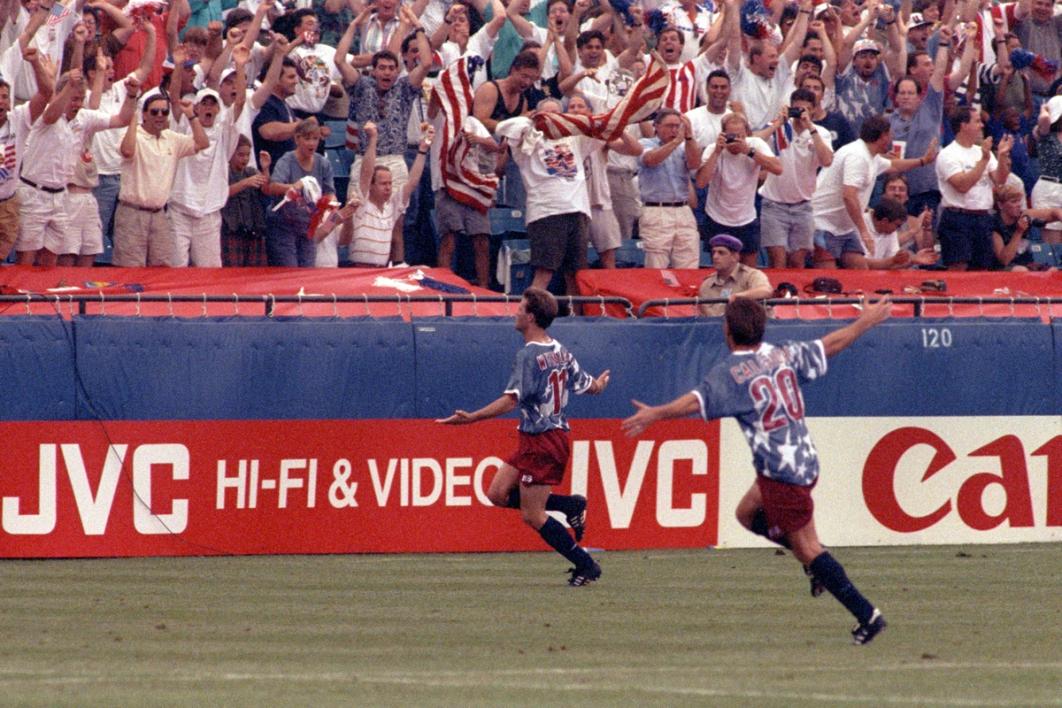
This is 26 USMNT Moments: Past to Present, a U.S. Soccer content series that covers 26 defining moments in U.S. Men's National Team history. From inspired victories to stunning goals, and the stars and hidden heroes who made them possible, each chapter reminds us that our dreams on the pitch are worth chasing. Together, they’ve built toward the biggest moment yet: the 2026 World Cup on home soil.
Emmy Award-winning journalist Ted Koppel is wearing the denim 1994 Men’s World Cup Team away kit. Like, the whole thing.
He’s taking headers with members of the 1994 USMNT. And the large majority of folks who have turned on ABC to catch Nightline tonight have no idea who anyone, besides Koppel, actually is.
In early June 1994, the “stars” of the USMNT weren’t stars at all. Koppel’s Nightline segment is part profile, part explainer. It opens with a few “man on the street” interviews.
“You know who John Harkes is?”
“You ever heard the name Tab Ramos?”
“How about Alexi Lalas?”
The questions are met with blank stares and a couple of guesses.
“Are they fighters?”
A poll included in the segment says that 80% of Americans don’t even know that the World Cup will begin in the United States just a few weeks from now. The lack of recognition from American audiences is so apparent that a large portion of the 22-minute piece is just Koppel explaining what a corner kick is.
That would change in a couple of weeks. But, in the meantime, most of the U.S. players were living in relative anonymity in Mission Viejo, California, where the U.S. Soccer Federation has set up a residency training camp to prepare for the World Cup. With no professional league in the USA, the USSF created the training environment 18 months before the World Cup. Players like Marcelo Balboa, Brad Friedel and Cobi Jones lived and trained together in south Orange County, practicing twice a day under head coach Bora Milutinović…when they weren’t traveling across the country and the world to get in as many games as possible.
In their free time, they’d head out to enjoy Southern California. The coastal cities of Orange County provided great food and chances to chill. Trips to Disneyland, especially for the players with kids, were on the agenda. It’s not like anyone would bother them in the line for “Pirates of the Caribbean.”
Then the tournament began.
“I remember getting on the overpass, and as we're going to the other side to get on, I look, and there's no cars,” Jones said on The U.S. Soccer Podcast last year. “I realized that the police had stopped the entirety of the freeway in rush hour traffic on the 5, so that we could get on and have a smooth sailing to the training site. Being a Cali kid, I was just like, ‘Okay, yep, this is it. It's here.’”
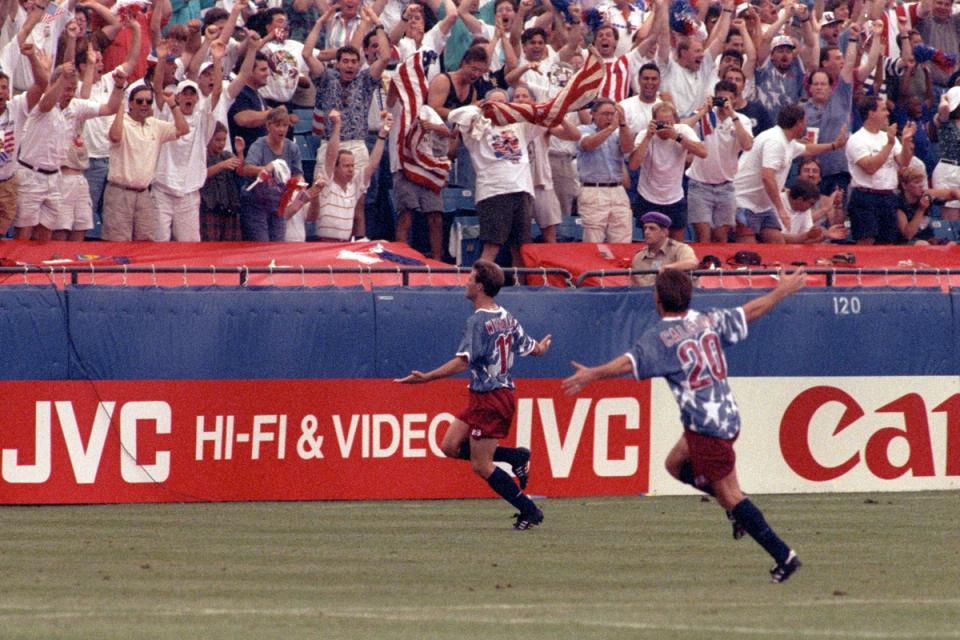
Some of the 80% of folks who didn’t know about the tournament must have caught on quickly. The USMNT opened the 1994 World Cup in front of 73,425 people at the Pontiac Silverdome outside Detroit. A 45th-minute goal from Eric Wynalda off a direct free kick would secure a 1-1 draw and a point for the U.S. The next match would go a long way to sealing the 1994 team’s legacy as a momentum-altering force for the sport in the United States.
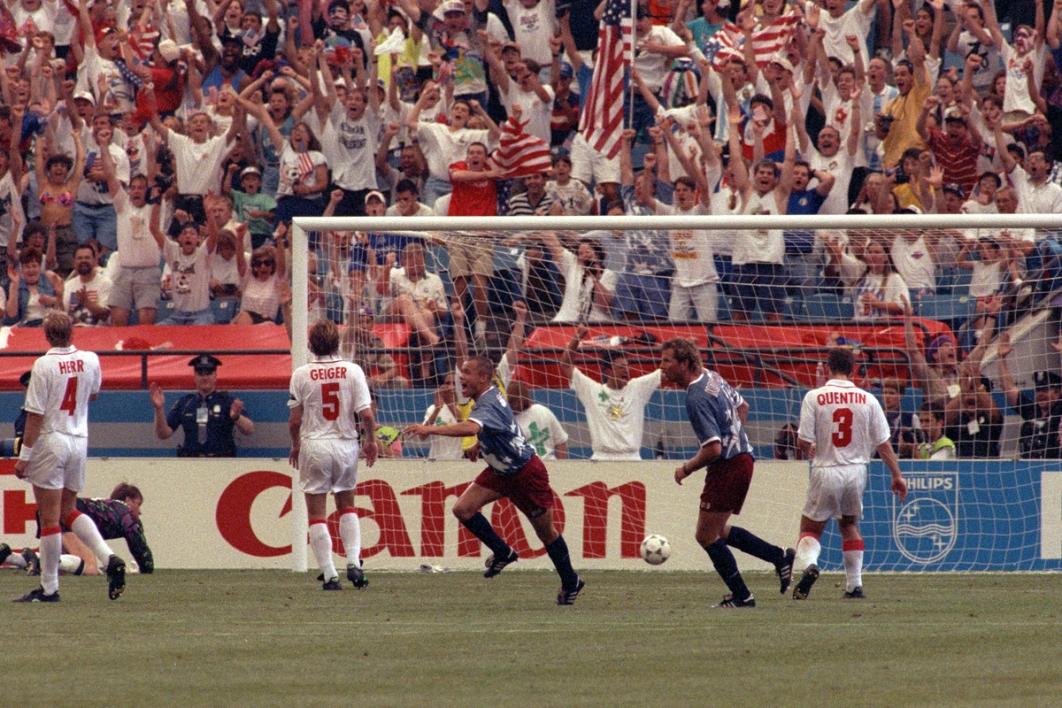
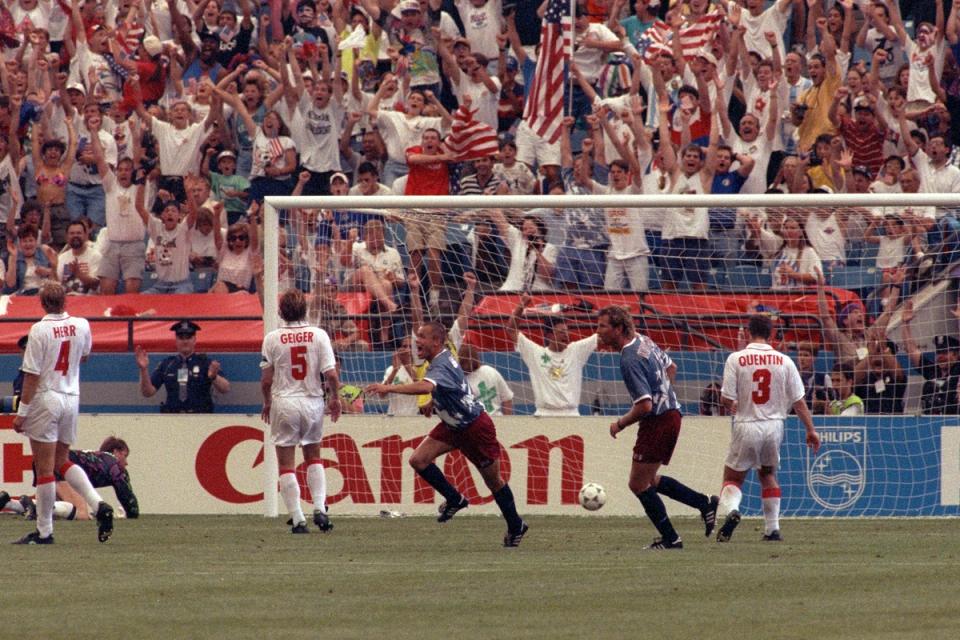
Colombia entered the World Cup as one of the tournament favorites. The USMNT had only beaten Los Cafeteros once in eight tries. It’s fair to say few people, if anyone, of the 93,869 that showed up to the Rose Bowl for the match expected a U.S. win.
But an own goal in the 35th minute gave the United States a 1-0 lead. And a beautiful Earnie Stewart finish via an even better Tab Ramos assist gave the U.S. a 2-0 advantage in the 52nd minute. Colombia pulled a goal back in the 90th minute, but that’s all they could manage.
Full time. 2-1. Three points for the USMNT. A huge upset and a watershed moment for soccer in America.
“I think it may have been the turning point,” Wynalda told MLSsoccer.com in 2016. “I think the starting point for all of this was when [Paul] Caligiuri scored in Trinidad [to get the U.S. into the 1990 World Cup]. And the turning point for Americans accepting the sport was the Colombia game. It was just real. The U.S. was not just participating; we were enjoying some success for the first time.”
The win marked the first World Cup win for the United States since 1950. The only member of the team alive for that win would have been the head coach, Milutinović. He was six.
The USA lost to Romania, 1-0, in the last group game, but the win over Colombia was enough to push the U.S. out of the group stage and into the Round of 16. Brazil was waiting. The USMNT, once again, were major underdogs against a tournament favorite.
The same magic they found against Colombia didn’t appear at Stanford Stadium that day, but the United States didn’t go out without a fight. A frustrating first half for Brazil culminated in a red card just before the break. The U.S., up a man, couldn’t find a breakthrough though, and Brazil pulled out a narrow 1-0 win in front of 84,000 fans on a late goal from Bebeto.
Brazil went on to win the tournament, defeating Italy after penalty kicks in the final. Years later, Brazil’s captain and defensive midfielder workhouse, Dunga, told a panel of FIFA legends through a translator that the 1-0 win “was probably the hardest game that Brazil played during that World Cup.”
The 1994 team’s journey ended there, but their impact set the stage for what’s followed since. It also earned them a little more recognition from the folks on the street. Marcelo Balboa told AS USA that the Mission Viejo crew went back to Disneyland a few months after the World Cup. This time, they were swallowed by crowds of fans. Someone besides Ted Koppel finally knew who they were.
Sam Jones covers MLS for MLSsoccer.com, and Atlanta United and NWSL Atlanta for FiveStripeFinal.com. Sam has covered MLS and Atlanta United since 2017.